
The best way to maintain consistent social media posting when you are too busy is to stop relying on manual posting and build an automated marketing workflow. When your content process is systemized, your business stays active, visible, and credible online even during busy weeks, protecting your digital visibility for small business growth.
If your business goes quiet every time you get busy, you do not have a content problem. You have a workflow problem. Most small businesses do not stop posting because they ran out of ideas. They stop because marketing depends on spare time, and spare time disappears first.
That is why consistent social media posting is so difficult to maintain manually. When operations, customers, hiring, delivery, and admin all compete for your attention, posting falls to the bottom of the list. The fix is not trying harder. The fix is building an automated marketing workflow that protects your digital visibility for small business growth, even when you are not actively thinking about content.
Why your business goes silent when you get busy
Most businesses go silent for a simple reason: marketing is treated like an extra task instead of an installed system. You might have good intentions, a list of content ideas, and even a rough plan. But if every post still requires you to stop, write, format, design, adapt for each platform, and publish manually, consistency will always break under pressure.
This is especially common when one person is carrying too much of the business. If that person is you, content only happens when you have energy left. And when business gets busy, the exact moment you need visibility the most is often when you disappear online.
Silence usually comes from one or more of these bottlenecks:
- No simple way to turn a quick idea into publish-ready content
- No repeatable process for adapting one message across multiple platforms
- No scheduling or automation layer to keep posting moving
- No backup content engine for weeks when you are fully occupied
That is why the inconsistent social media posting problem is rarely solved by motivation alone. It is solved by removing the manual bottleneck.
What inconsistent posting actually costs you
When your business stops showing up online, the damage is not always immediate, but it is real. Prospects may not consciously think, “They have not posted in 12 days.” What they do notice is the absence of activity, relevance, and momentum.
Inconsistent posting affects three things fast. First, it weakens trust. An active business feels current and reliable. A silent one can feel stalled. Second, it reduces reach. Most platforms reward steady activity more than random bursts. Third, it hurts recall. If people do not keep seeing your brand, they stop thinking of you when they need what you sell.
This is where digital visibility for small business becomes practical, not theoretical. Visibility is not just about getting seen once. It is about staying present often enough that your business remains familiar, credible, and easy to choose.
When posting is inconsistent, you often see symptoms like:
- Lower engagement over time
- Fewer inquiries from social channels
- Long gaps between touchpoints with prospects
- A brand presence that looks less active than competitors
If you have ever wondered why social media is not working for your business, inconsistency is often a major reason. Not because every post must go viral, but because silence breaks the trust-building sequence.
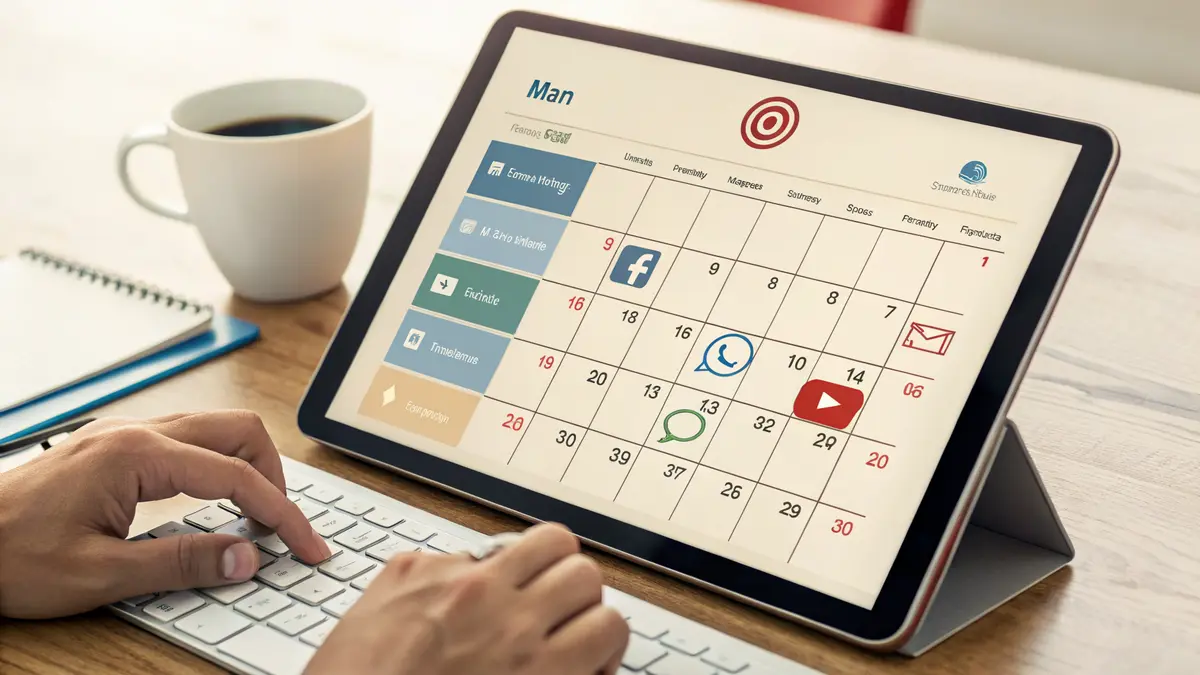
The real fix is a repeatable automated marketing workflow
The most effective solution is to create a workflow where content does not depend on your daily availability. That means reducing the number of decisions, steps, and manual actions required to stay visible.
A strong automated marketing workflow usually has four parts:
- Input: a quick way for you to submit an idea, update, offer, or insight
- Transformation: that input gets shaped into content suitable for each channel
- Distribution: content is published or scheduled consistently across platforms
- Continuity: the system keeps running even when you are in a busy stretch
This matters because your job should be providing the spark, not building every post from scratch. If one business update can become multiple pieces of platform-specific content, you immediately reduce the workload that usually causes silence.
That is also why businesses increasingly move toward systems instead of pure manual posting. A system does not need perfect energy, perfect timing, or a free afternoon. It needs a process.
If you want to understand what that looks like in practice, you can review how the system works and see how a single input can support ongoing visibility without constant manual effort.
What a busy owner should automate first
You do not need to automate everything at once. Start with the content categories that are most important for staying visible and most likely to get skipped when your schedule fills up.
For most businesses, that means automating:
- Core social posting: regular educational, promotional, and trust-building posts
- Business updates: announcements, seasonal offers, service reminders, and availability
- Repurposed content: turning one idea into content for Instagram, Facebook, LinkedIn, X, Pinterest, or other relevant channels
- Search-supporting activity: updates that strengthen your wider online presence, including your business profile
The goal is not to flood every platform. The goal is to make sure your business never looks abandoned. Consistent activity signals reliability.
One of the most overlooked areas here is local and search visibility. If your social channels are active but your business profile is stale, your online presence still feels uneven. That is why many businesses also benefit from improving Google Business Profile visibility as part of the same workflow.
How to maintain consistent social media posting without being online daily
The key is to design for low effort, not high discipline. If your process only works when you are highly organized and fully available, it will fail during real business conditions.
Here is a practical model that works better:
- Keep idea capture simple. Use one place to submit quick thoughts, updates, wins, promotions, or customer insights.
- Build from your business DNA. Your content should reflect what you sell, who you help, and how you solve problems so the output stays relevant.
- Repurpose automatically. One message should become multiple versions tailored to the platforms that matter most to you.
- Use scheduling and continuity. Content should keep moving even when you are in delivery mode, travel mode, or problem-solving mode.
- Review, do not rebuild. Your role should be guiding the message, not manually constructing every asset.
This is what makes social media automation useful for small businesses. It does not replace your expertise. It protects your consistency. That distinction matters.
When done well, automation helps you stay visible without forcing you to be online every day. Instead of asking, “What should I post today?” you create a system where posting is already happening in a controlled, brand-aligned way.
How to choose a system that protects your digital visibility
Not every tool or service solves the real issue. Some still leave you doing too much manual work. Others create generic content that does not sound like your business. The best setup is the one that removes friction while keeping your brand clear and active.
Look for a system that does these things well:
- Lets you submit ideas quickly without a complicated workflow
- Adapts content across multiple platforms instead of making you rewrite everything
- Keeps posting consistent during busy periods
- Supports more than one visibility channel when needed
- Feels like infrastructure, not another task to manage
This is where many small businesses start comparing manual help, freelancers, agencies, and automation. The right answer depends on your needs, but if your main problem is going silent when you get busy, you need continuity more than occasional bursts of help.
A reliable small business marketing system should reduce dependence on your daily attention. If it still needs constant chasing, approvals, and rebuilding from scratch, it has not actually solved the bottleneck.
For businesses that want that kind of continuity, SynqBrand is built around the idea that visibility should not disappear when you are busy. Its approach centers on publishing, engagement support, and broader search presence through an installed system rather than manual marketing effort. If you want to explore options, you can review the available marketing automation packages.
At the simplest level, this is the shift: stop treating content like a daily emergency. Build a workflow that keeps your business present, credible, and active whether you are available or not.
If your business keeps going quiet online, do not blame yourself for lacking consistency. Fix the structure behind the inconsistency. Once your marketing runs through a repeatable system, consistent social media posting becomes much more realistic, and your digital visibility for small business growth becomes far less fragile.
If you are ready to stop relying on manual posting, a natural next step is to see whether an installed workflow fits your business. You can start here: get started with SynqBrand.
TL;DR
If your business disappears online whenever you get busy, the problem usually is not motivation. It is that your marketing depends on manual effort. The most reliable fix is an automated marketing workflow that turns one idea, update, or offer into scheduled content across your key channels. That gives you consistent social media posting, protects digital visibility for small business, and keeps your brand active even when you are focused on operations.
- Inconsistent posting is usually a system problem, not a discipline problem.
- When your business goes quiet online, trust, reach, and lead flow often drop with it.
- A simple automated marketing workflow reduces dependence on daily manual posting.
- You should automate recurring content first: updates, offers, educational posts, and profile activity.
- The best setup starts with a lightweight input process and distributes content across channels consistently.
How often should a small business post on social media?
The right frequency depends on your capacity, but consistency matters more than intensity. A realistic posting rhythm you can sustain every week is usually better than posting heavily for one week and disappearing for the next three.
Why does my business lose engagement when I stop posting?
When you stop posting, your audience stops seeing signs that your business is active. That reduces familiarity, weakens platform momentum, and can make prospects hesitate because your brand appears less current.
Can automation still feel authentic?
Yes. Good automation handles distribution, scheduling, and content adaptation. Your voice, offers, and business knowledge still drive the message. Automation should remove bottlenecks, not make your brand sound generic.
What should I automate first if I have limited time?
Start with recurring content that supports visibility: social posts, business updates, educational content, promotions, and Google Business Profile activity. These are the first areas that usually go silent when you get busy.
Is an automated marketing workflow better than hiring someone to post manually?
It depends on your business, but many small businesses benefit from systems first. A workflow can keep output consistent without relying on constant back-and-forth, which is often where manual posting breaks down.