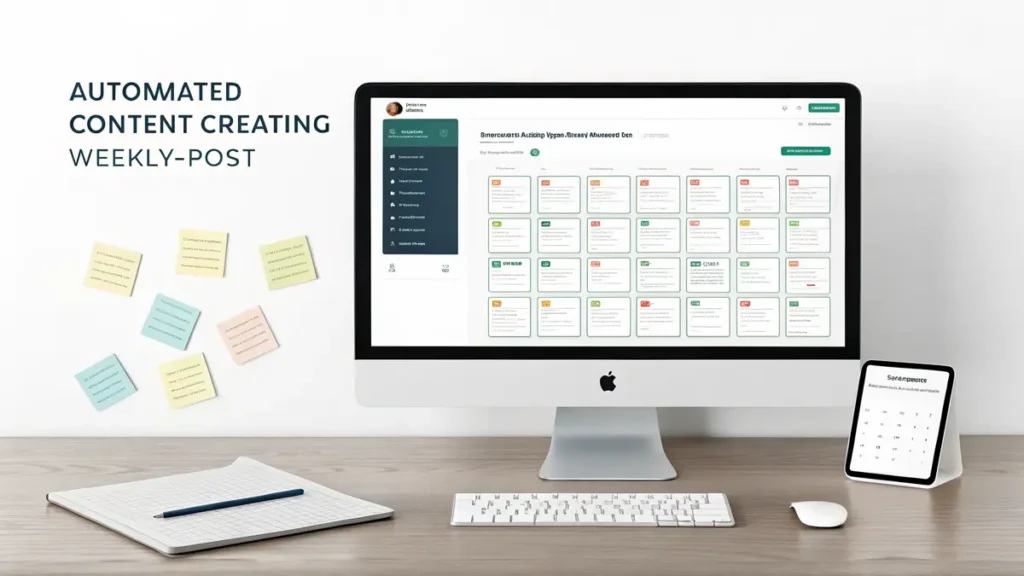

The hidden cost of inconsistent posting is lost trust, weaker reach, and an unstable pipeline. Consistent social media posting keeps your business visible and credible, while social media automation and a marketing automation system help you maintain that consistency without relying on last-minute effort.
You can post ten times in three days, feel productive, and still lose momentum where it matters most. When your business shows up in bursts and then disappears for weeks, the problem is not just uneven engagement. It is that your visibility becomes unreliable, your audience stops expecting to hear from you, and your marketing starts working in random spikes instead of a steady flow.
This is why consistent social media posting matters more than occasional intensity. Most small businesses do not struggle because they lack ideas. They struggle because marketing depends on spare time, memory, and energy. That creates a cycle of overposting when you are motivated and silence when operations get busy. Over time, that pattern quietly costs you trust, reach, and sales opportunities.
Why burst posting feels productive but hurts results
Burst posting creates the illusion of momentum. You finally sit down, make several posts, update your channels, and feel like marketing is handled. For a moment, it looks active. But social visibility is not built on occasional effort. It is built on repeated presence.
Your audience does not experience your marketing in one batch the way you do behind the scenes. They experience it over time. If they see you active one week and absent for the next three, your brand feels inconsistent no matter how much work you did during that short sprint.
This matters because people often judge reliability before they ever contact you. A quiet feed can signal that you are too busy, no longer active, or simply not invested in staying visible. Even if none of that is true, inconsistent posting creates doubt that steady brands avoid.
What inconsistency costs you over time
The cost of disappearing is rarely obvious in one day. It compounds quietly.
First, you lose familiarity. Most buyers do not act the first time they see you. They need repeated exposure before your business feels recognizable and trustworthy. When your posting pattern is irregular, that familiarity resets again and again.
Second, you weaken engagement quality. It is not only about likes. When people stop seeing you consistently, they stop remembering to check your offers, click through, reply, or refer you. Your content loses continuity, and each return feels like starting over.
Third, your lead flow becomes harder to predict. Businesses often say social media is not working when the deeper issue is that their visibility is too inconsistent to build momentum. If your audience only hears from you when you have time, your pipeline will often reflect that same stop-start pattern.
Finally, inconsistency creates internal drag. Every time you return after a gap, you have to rebuild the habit, rethink what to post, and overcome the friction of restarting. That restart cost is one of the most expensive parts of manual marketing.

Why platforms and people reward consistency
Consistency works because it aligns with how attention is built. People trust what feels stable. Platforms also tend to reward accounts that show ongoing activity rather than erratic bursts followed by silence.
You do not need to post constantly to benefit from this. You need to post reliably enough that your business stays present in the market. A manageable weekly rhythm usually outperforms an ambitious plan that collapses after a few days.
That is also why a social media automation approach can be so valuable. It is not just about convenience. It protects continuity. Instead of relying on motivation, you create a process that keeps your business active even when client work, operations, or life gets busy.
Consistency also improves message clarity. When your content appears regularly, your audience has more chances to understand what you do, who you help, and why they should remember you. Repetition is not a weakness in marketing. It is how recognition is built.
The operational problem behind inconsistent posting
Most inconsistent posting is not a creativity problem. It is an operations problem.
If your content depends on finding time, opening multiple platforms, rewriting the same idea for each channel, and remembering to publish manually, inconsistency is almost guaranteed. The more steps your process requires, the easier it is for marketing to get pushed behind urgent tasks.
This is where many businesses get stuck. They believe they need more discipline when what they actually need is a simpler system. A repeatable workflow reduces the number of decisions you have to make each time. Instead of asking, “What should I post today?” you work from a structure that turns one idea into multiple touchpoints.
If you want to see what that kind of setup looks like in practice, SynqBrand explains how the system works in a way that shows the difference between manual posting and a more reliable publishing process.
The key insight is simple: when marketing is built as a process, consistency becomes normal. When marketing is built as a task you squeeze in, inconsistency becomes normal.
How to fix the cycle with a repeatable system
To stop posting in bursts, you need to remove the conditions that create bursts in the first place.
Start by choosing a realistic publishing cadence. Not your ideal schedule. Your maintainable one. It is better to post three times every week for six months than ten times this week and nothing next month.
Next, reduce content friction. Build from core ideas instead of creating every post from scratch. One customer question, offer, insight, or product angle can become multiple pieces of content across platforms.
Then standardize distribution. If every platform requires separate effort, consistency will always be fragile. A process that adapts one idea into multiple formats saves time and protects output.
Finally, review your visibility beyond social alone. If your business also depends on local search or branded search, keeping supporting channels active matters too. For example, an updated business profile can reinforce trust when someone checks your brand after seeing a post. That is why broader visibility systems, including Google Business Profile visibility, often support better results than isolated posting efforts.
The point is not to become louder. It is to become reliably present.
When social media automation makes sense
If your current pattern is burst, disappear, restart, repeat, automation is worth considering. Not because automation replaces strategy, but because it protects execution.
A good marketing automation system helps you maintain output when your attention is elsewhere. It reduces the manual bottleneck that causes long gaps. It can also help you repurpose content, maintain platform coverage, and keep your brand visible without rebuilding the process every week.
This is especially useful if you already know what you want to say but struggle to publish consistently. In that case, the problem is not message quality. It is delivery reliability.
For businesses that want a more structured solution, SynqBrand offers systems designed to keep content moving across channels without turning your week into a manual posting routine. You can review available marketing packages or get started if you are ready to replace inconsistency with a process that actually holds up.
The hidden cost of burst posting is not just lower engagement on a few posts. It is the long-term damage caused by unreliable visibility. When your business shows up steadily, you become easier to remember, easier to trust, and easier to choose. That is the real value of consistent social media posting: not more noise, but more dependable presence.
TL;DR
Posting heavily for a few days and then going silent for weeks creates more damage than most businesses realize. It weakens trust, reduces reach, interrupts lead flow, and makes your brand look unreliable. The real fix is not more motivation. It is a repeatable process built around consistent social media posting, supported by social media automation and a practical marketing automation system.
- Burst posting creates short-term activity but weak long-term visibility.
- Inconsistent social media posting makes your business look less reliable to both prospects and platforms.
- The biggest cost is not just lower engagement. It is interrupted trust and unpredictable lead flow.
- Most inconsistency is an operations problem, not a creativity problem.
- Consistent social media posting becomes easier when you use a documented workflow instead of relying on spare time.
- Social media automation helps maintain presence, especially when your schedule gets busy.
- A marketing automation system can turn one idea into ongoing visibility across channels.
Is posting in bursts really worse than posting less often but consistently?
Yes. A lighter but steady schedule usually performs better over time because it keeps your brand visible, predictable, and easier for audiences to trust.
Why does inconsistent posting hurt engagement so much?
When you disappear, your audience stops expecting to hear from you. Platforms also lose recent signals that your content is active and relevant, which can reduce reach.
How often should a small business post?
The best schedule is one you can maintain. For many small businesses, a realistic weekly cadence is better than an ambitious plan that collapses after a few days.
Can social media automation make content feel robotic?
It can if used poorly. But when automation is built around your brand voice, real offers, and useful ideas, it supports consistency without removing authenticity.
What is the difference between social media automation and a marketing automation system?
Social media automation usually handles scheduling and publishing. A marketing automation system is broader and supports repeatable visibility across content creation, distribution, and sometimes blog or search presence too.