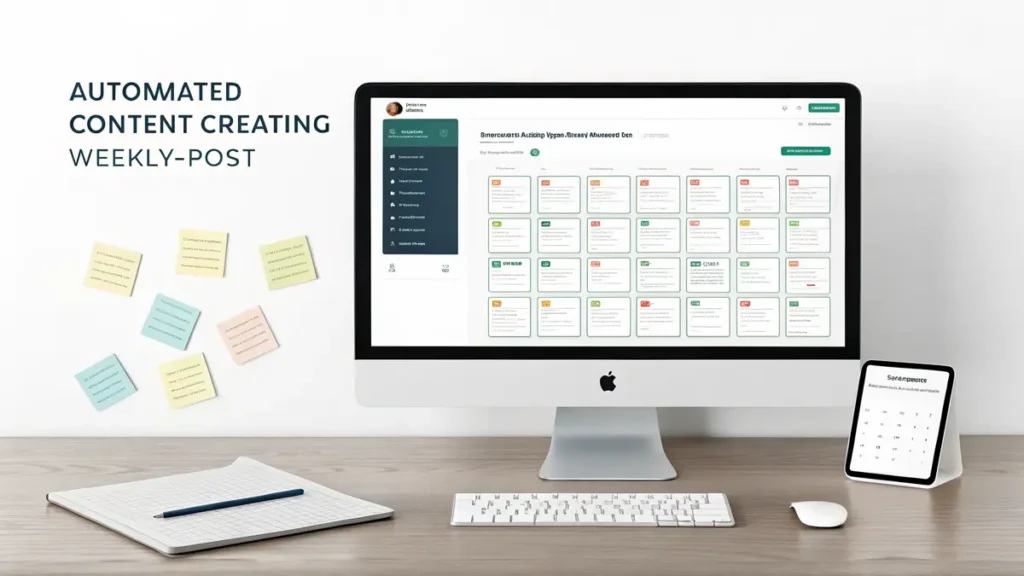

In the social media agency vs automation decision, automation usually keeps marketing more consistent because it removes the manual bottlenecks that cause posting gaps. A marketing automation system is built for repeatable publishing, while a traditional agency often depends on meetings, approvals, and ongoing coordination. If your main goal is reliable visibility, content automation for business is often the more dependable option.
If you are comparing social media agency vs automation, the real question is not which one sounds more impressive. It is which one actually keeps your marketing running when your week gets busy, your priorities shift, and you do not have time to chase content.
For most small businesses, inconsistency is not caused by a lack of ideas. It is caused by a broken process. A traditional agency can help in some cases, but if your main problem is staying visible every week, a marketing automation system often solves that problem more reliably than a manual service model. That is especially true when you need content automation for business across multiple platforms, not just occasional campaign support.
What consistency actually means in marketing
Consistency does not just mean posting often. It means your business shows up regularly enough that customers remember you, trust you, and keep seeing signs that you are active.
In practice, consistent marketing means:
- Your channels stay active even when you are busy.
- Your content appears on a predictable schedule.
- Your messaging stays aligned with your offers and brand.
- Your visibility does not disappear between bursts of effort.
This matters because most businesses do not lose momentum from one bad post. They lose momentum from silence. Weeks go by, then months, and suddenly their social presence looks abandoned. That hurts trust, weakens recall, and reduces the chance that someone chooses you when they are ready to buy.
So when you compare a social media agency with automation, judge both options by one standard: which one makes silence least likely?
Where a social media agency helps and where it breaks
A social media agency can absolutely be useful. If you need campaign planning, brand strategy, creative direction, or a team to manage launches, an agency may be the right fit. Agencies are often strongest when the work requires human judgment, deeper positioning, or custom creative execution.
But consistency is where the model can start to break down.
Why? Because many agencies still run on manual workflows. They need briefs, approvals, content collection, revisions, and scheduled check-ins. If you are slow to respond, the content calendar slips. If the agency is juggling many clients, your posting cadence may become uneven. If your budget is limited, you may only get a narrow amount of output each month.
That does not make agencies bad. It just means they are not always designed to solve the exact problem of ongoing, dependable visibility.
Common friction points include:
- Content depends on your availability and input.
- Posting volume is limited by service scope.
- Turnaround can slow down when revisions pile up.
- Costs rise when you need more platforms or more content.
- Consistency can weaken if the relationship becomes less active.
This is why many business owners feel frustrated even after hiring help. They expected consistency, but what they really bought was managed manual effort.

Where a marketing automation system wins
A marketing automation system is built around repeatability. Instead of asking, “Who is going to remember to do this every week?” it asks, “How do we make this happen without depending on memory, extra time, or constant coordination?”
That is why automation tends to win when your main goal is consistency.
With the right setup, automation can:
- Turn one idea into multiple platform-ready posts.
- Keep content moving even when you are focused on operations.
- Reduce the lag between idea, creation, and publishing.
- Support cross-platform visibility without multiplying your workload.
- Maintain a reliable publishing rhythm over time.
This is especially valuable for small businesses that do not need a full creative department. They need a system that keeps them active, present, and professional without turning marketing into a second full-time job.
Good content automation for business is not just auto-posting random messages. It should reflect your business offers, voice, and priorities. It should also help you stay visible where customers already look, including social channels and search-connected assets like your business profile. If you want to see Google Business Profile visibility as part of that system, it should connect naturally rather than live in a separate workflow.
And if you are trying to understand how the system works, the key idea is simple: remove the manual bottleneck so your marketing does not stop every time your schedule fills up.
The real tradeoff: control, strategy, and output
The decision is not really agency versus software in the abstract. It is a tradeoff between kinds of support.
A social media agency usually gives you more human interpretation. You may get strategic input, campaign ideas, and custom creative thinking. In exchange, you often accept slower execution, more coordination, and higher dependency on people and process.
Automation gives you more operational reliability. You may get less day-to-day human brainstorming, but you gain speed, structure, and output consistency. In exchange, you need a system that is well configured to your business so the content stays relevant.
If your biggest pain point is:
- “We do not know what to say” — strategy support may matter more.
- “We know what to say, but we never post consistently” — automation is usually the better answer.
- “We need both” — strategy can set direction, but automation should carry the ongoing execution.
This is where many businesses make the wrong choice. They buy strategy when their real problem is execution. Or they hire for creativity when their real problem is operational inconsistency.
If your channels keep going quiet, the fix is rarely another meeting. It is usually a better system.
Which option is better for your business stage
Your stage of growth matters.
If you are an early-stage or time-strapped business owner, automation is often the smarter move because it gives you leverage quickly. You do not need a heavy service model. You need dependable output.
If you are running a larger campaign, entering a rebrand, or coordinating multiple stakeholders, an agency may be useful for the strategic layer. But even then, relying only on manual execution can still create gaps between campaigns.
Automation is often the better fit when:
- You are currently posting inconsistently.
- You rely on yourself to create or approve everything.
- You want more visibility without hiring an internal team.
- You need content distributed across several platforms.
- You want a system that keeps working even when you are busy.
An agency may be the better fit when:
- You need custom campaign strategy and creative leadership.
- You have the budget for ongoing managed services.
- You can support a collaborative approval process.
- Your business needs more brand development than publishing consistency.
For many small businesses, the practical answer is not “Which one is better in theory?” It is “Which one removes the biggest bottleneck right now?” If that bottleneck is inconsistent output, automation usually delivers more immediate value.
If you are comparing options, reviewing marketing automation packages can help you judge what level of support matches your current stage without overbuying services you do not need.
What actually keeps your marketing consistent
What keeps your marketing consistent is not motivation. It is infrastructure.
You can have good intentions, strong offers, and real expertise, and still disappear online if your marketing depends on spare time. That is why the best answer to the social media agency vs automation question comes back to one principle: consistency comes from systems that keep running without constant manual effort.
If your business needs strategic reinvention, an agency may be worth it. But if your business already knows what it does and simply needs to stay visible, a marketing automation system is often the more dependable solution. It reduces friction, shortens the path from idea to publication, and makes your brand easier to trust because people keep seeing it.
That is also why content automation for business has become such a practical choice for owners who are tired of starting and stopping. It turns marketing from a recurring task you must remember into a repeatable process that supports growth.
At that point, consistency stops being a personal discipline problem and becomes a business asset.
If you want a lighter, more reliable way to stay active across platforms, SynqBrand is built around that exact challenge. You can explore the system, review your options, and get started when you are ready to remove manual marketing from your workflow.
TL;DR
If your main problem is inconsistent marketing, automation usually beats a traditional agency for day-to-day reliability. A social media agency can help with strategy, campaigns, and creative direction, but consistency often drops when content depends on meetings, approvals, and manual execution. A marketing automation system is built to keep your business visible on a repeatable schedule, especially when you need steady posting across multiple platforms without adding more work to your week.
- Consistency is usually a systems problem, not just a creativity problem.
- A social media agency can be valuable, but it often relies on manual workflows that create gaps.
- A marketing automation system is stronger when your priority is reliable publishing and ongoing visibility.
- Automation works best when it is tailored to your business, not generic or random.
- If you want fewer marketing bottlenecks, choose the option that reduces dependence on your time.
Is a social media agency better than automation?
It depends on your main goal. If you need strategic campaigns, brand direction, or hands-on creative management, an agency may help. If your biggest issue is staying visible consistently, automation is often the better fit.
Can automation replace a social media manager?
Automation can replace much of the repetitive publishing work, but not every strategic or high-touch task. It is strongest for keeping content flowing consistently across platforms.
What is the biggest reason businesses stop posting consistently?
Most businesses stop because marketing depends on manual effort, limited time, and inconsistent follow-through. When the owner gets busy, posting disappears.
Is content automation for business too generic?
It can be if the system is poorly designed. A good setup uses your business information, offers, and voice to create relevant content rather than generic filler.
When should you choose a marketing automation system?
You should consider it when you need dependable visibility, faster publishing, and less reliance on manual posting across multiple channels.