
In a direct social media agency vs automation comparison, automation is usually the better choice if your main goal is keeping your business visible consistently. A marketing agency for small business can help with strategy and campaigns, but social media automation is often faster, more affordable, and more reliable for ongoing posting across platforms.
If you are comparing social media agency vs automation, you are probably not asking an abstract marketing question. You are trying to solve a practical one: how do you keep your business visible without turning content into a full-time job?
For most small businesses, visibility does not disappear because they lack ideas. It disappears because marketing depends on manual effort. You get busy, posting slows down, channels go quiet, and your business starts looking inactive. That is why the real comparison is not agency versus software in theory. It is which option actually keeps your business showing up week after week.
What businesses really need from marketing
Most business owners do not need more marketing complexity. They need a dependable system that keeps them present where customers look: social platforms, search results, and business listings.
That matters because visibility is often a consistency problem, not a creativity problem. You may already know what to say. The issue is turning one idea into multiple posts, adapting it for each platform, and publishing often enough to stay relevant.
When people look for a marketing agency for small business, they are often really looking for relief from that operational burden. They want their business to stop going silent. So before choosing any solution, ask one question: do you need strategic guidance, or do you need a system that keeps the engine running?
If your main pain point is execution, consistency, and staying active everywhere, the answer usually points toward automation rather than a traditional service model.
Where a social media agency helps and where it falls short
A social media agency can be valuable when you need high-level planning, campaign concepts, creative direction, or a team to manage launches. Agencies are especially useful when your business has a larger budget, multiple stakeholders, or a need for custom strategy and reporting.
But that is not the same as saying an agency is the best way to stay visible every day.
Here is where agencies often fall short for smaller businesses:
- They are expensive relative to the task. If your core need is regular publishing, a monthly retainer can be overkill.
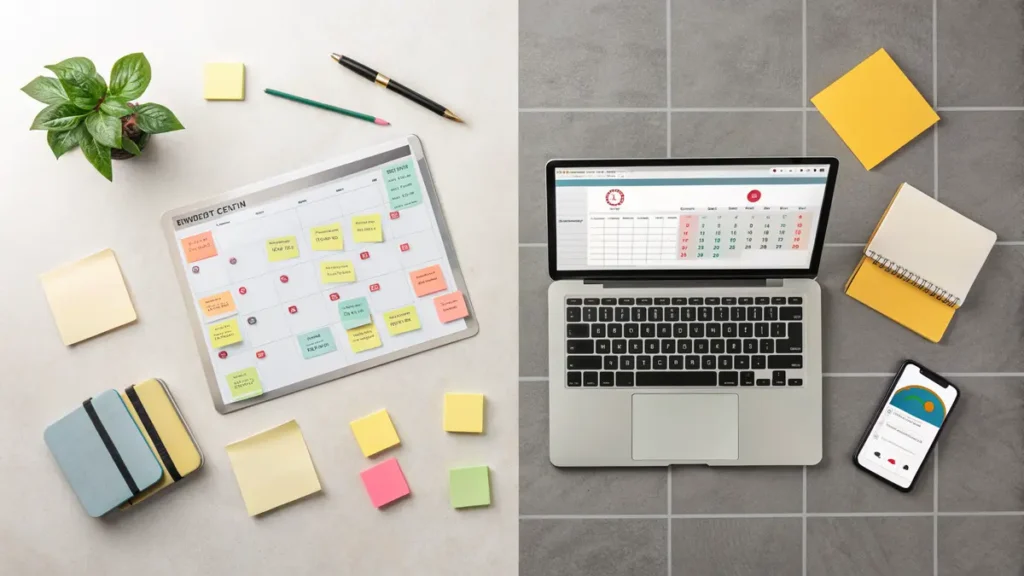
- They still depend on manual workflows. Content calendars, approvals, revisions, and scheduling can slow everything down.
- They need your input anyway. Many owners assume hiring an agency removes them from the process. In reality, agencies still need ideas, feedback, assets, and approvals.
- Consistency can suffer when priorities shift. If your account is one of many, your posting rhythm may not feel as immediate as your business needs.
That does not make agencies bad. It just means they are not always the best fit for the specific problem of day-to-day visibility. If your business keeps disappearing online because content is too manual, adding another manual layer may not solve the root issue.
What social media automation actually solves
Social media automation is not just about scheduling posts in advance. At its best, it removes the bottleneck that causes your marketing to stall in the first place.
Instead of relying on a person to manually rewrite, resize, schedule, and distribute every piece of content, automation turns one input into a repeatable publishing workflow. That means your business can stay active across multiple channels without requiring constant hands-on effort.
For a small business, that solves several real problems at once:
- It reduces inconsistency. Your presence no longer depends on whether you had time this week.
- It multiplies one idea. A single concept can be adapted for Instagram, LinkedIn, Facebook, X, Pinterest, and more.
- It protects visibility. Your business keeps showing up even during busy seasons.
- It lowers operational drag. You spend less time managing marketing and more time running the company.
This is why automation is often the stronger answer for businesses asking why social media is not working. In many cases, the issue is not poor messaging. It is that the business is not present often enough to be remembered.

If you want to understand what that kind of workflow looks like in practice, see how the system works. The key advantage is simple: automation keeps your business active without requiring you to rebuild the process every time you want to post.
Social media agency vs automation on cost, speed, and consistency
When you compare social media agency vs automation honestly, three factors matter most for small businesses: cost, speed, and consistency.
Cost: Agencies usually come with monthly retainers that reflect labor, meetings, revisions, and management time. Automation systems are generally more efficient because they reduce repeated manual work. If your goal is ongoing visibility rather than custom campaign development, automation often delivers more output per dollar.
Speed: Agencies can move slowly because every post may pass through planning, drafting, approval, and scheduling. Automation shortens that chain. One idea can become multi-platform content quickly, which matters when you need to stay active without delay.
Consistency: This is where automation usually wins most clearly. Agencies still rely on people and process capacity. Automation is designed to publish reliably. For businesses struggling with inconsistent social media posting, that difference is not minor. It is the whole point.
So if your question is which option creates the most polished custom strategy, the answer may vary. But if your question is which one actually keeps your business visible, automation has a strong practical advantage.
When a marketing agency for small business still makes sense
There are still situations where a marketing agency for small business is the right choice.
An agency may make sense if:
- You need a full rebrand or positioning strategy.
- You are running paid campaigns that require active management.
- You need custom creative production at a high volume.
- Your team wants outside strategic leadership, not just execution.
In those cases, an agency can add value that automation alone does not replace.
But many businesses hire an agency when what they really need is a reliable publishing infrastructure. That is an expensive mismatch. If your business already knows its offer, audience, and basic message, the bigger issue is usually maintaining visibility consistently across channels.
That is also why a system that extends beyond social posting can be more useful than a standard agency arrangement. If your visibility depends on multiple surfaces, including search and local discovery, it helps to support more than social alone. For example, strengthening Google Business Profile visibility can reinforce the same goal: making sure your business keeps appearing where people look.
The best choice if your goal is staying visible
If your main objective is visibility, not endless coordination, automation is usually the better choice.
It gives you a repeatable system instead of another task queue. It helps you stay active when business gets busy. It makes one idea travel farther. And it removes the stop-start pattern that causes so many small businesses to disappear online.
That does not mean every automated solution is equal. The best systems do more than schedule posts. They adapt content across platforms, support ongoing content generation, and help your business stay present beyond social alone.
That is the practical difference between hiring for output and installing infrastructure. If you want to stop relying on manual marketing, a system-based approach is often the more durable answer.
SynqBrand is one example of that model. Rather than acting like a traditional agency that simply posts for you, it is built to install an autonomous marketing infrastructure that keeps your business visible across platforms while removing the manual bottleneck. If you want to compare options, you can review the available automation packages or get started when you are ready.
The bottom line is simple: if your business keeps going quiet because marketing depends on your time, automation is usually the option that actually keeps you visible.
TL;DR
If your main problem is staying visible consistently, social media automation usually beats a traditional agency on speed, cost control, and reliability. A marketing agency for small business can still help with campaigns, branding, or strategy, but many small businesses do not need a high-touch team just to keep posting and showing up. If visibility is the goal, automation is often the more practical system.
- If your business goes silent because posting depends on your time, automation solves the real bottleneck.
- A social media agency can add strategic value, but it often comes with higher cost and slower execution.
- For day-to-day visibility, social media automation is usually more consistent than manual agency workflows.
- Small businesses should choose based on the problem they need solved: visibility, not vanity.
- The strongest setup is often a system that publishes, repurposes, and maintains presence across platforms automatically.
Is a social media agency better than automation?
It depends on your goal. If you need campaign strategy, creative direction, or brand positioning, an agency may help. If you need reliable day-to-day visibility and consistent posting, automation is often the better fit.
Is social media automation worth it for a small business?
Yes, especially if your biggest issue is inconsistency. Automation reduces the time burden, helps you keep showing up, and can stretch one content idea across multiple platforms.
Can automation replace a marketing agency for small business?
For routine publishing and visibility, often yes. For advanced strategy, paid campaigns, or full brand management, not always. Many small businesses need a system first and outside strategy second.
Why do businesses lose visibility on social media?
The most common reason is inconsistency. When posting depends on spare time, content stops. Once your business goes quiet, reach and recognition usually drop with it.
What is the most cost-effective way to stay visible online?
For many small businesses, an automated marketing workflow is the most cost-effective option because it keeps content moving without requiring constant manual effort or a full agency retainer.