
For most small businesses, automated content creation should start with social posts first, then Google Business Profile updates, and then blog content. Social automation solves consistency fastest, GBP updates improve local visibility, and blog automation usually works best after your publishing system is already running smoothly.
If you are trying to decide what to automate first, the smartest answer is usually not “everything.” It is choosing the channel that removes the biggest manual bottleneck while improving visibility quickly. For most businesses, that means starting with automated content creation for social posts before moving into blog content or Google Business Profile updates.
That order is not about which channel is most important in theory. It is about which one is easiest to sustain, fastest to deploy, and most likely to stop the pattern of inconsistent marketing. If you automate the wrong thing first, you can end up with more complexity but not more visibility. If you automate the right thing first, you create momentum that makes the next layer much easier.
The short answer: start with social posts
For most small businesses, social posts should be the first thing you automate. The reason is simple: social content is the most frequent, the most repetitive, and the most likely to break when your schedule gets busy. It is usually the first place where manual marketing fails.
When posting depends entirely on your time, consistency disappears. You skip a week, then two, then a month. Your audience sees an inactive business, and your marketing loses rhythm. Social automation fixes that first because it creates a reliable baseline of visibility without requiring you to build a full editorial operation.
It also gives you fast feedback. You can see whether your messaging is landing, whether your offers are clear, and whether your business is showing up regularly enough to stay top of mind. That makes social the best first layer in a practical content automation for business strategy.
Why social posts are usually the first layer of automation
Social posts are the easiest automation win because they solve a daily or weekly execution problem. They do not require the same depth as a blog article, and they do not depend as heavily on local search behavior as Google Business Profile updates. They simply keep your business active where people already expect to find signs of life.
There are three reasons this matters.
First, social posting has the highest consistency burden. Most businesses do not fail because they lack ideas. They fail because they cannot turn ideas into regular posts. Automation closes that gap.
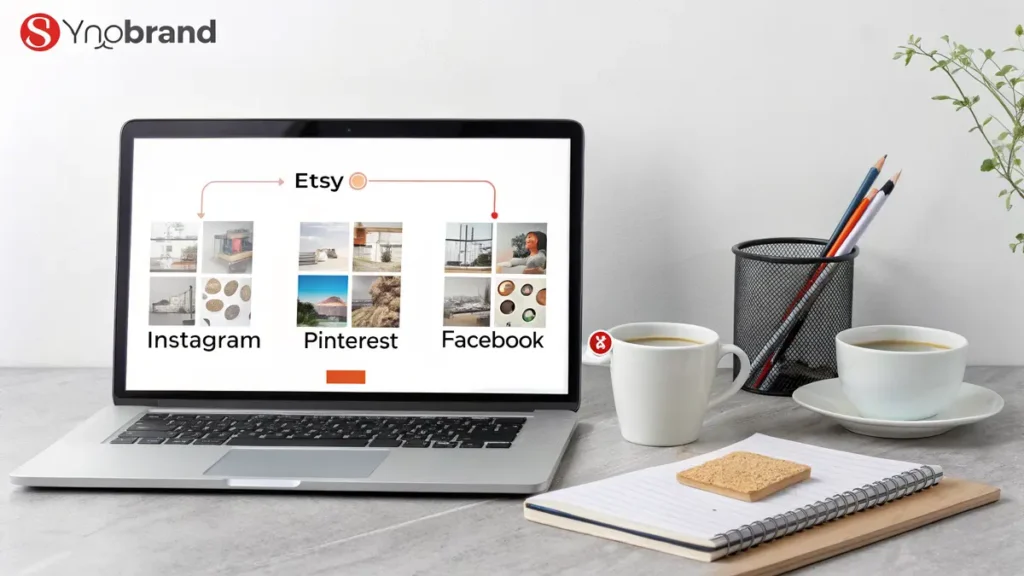
Second, social is flexible. A single idea can be adapted across multiple platforms. That means one input can become several outputs, which makes automation efficient from day one.
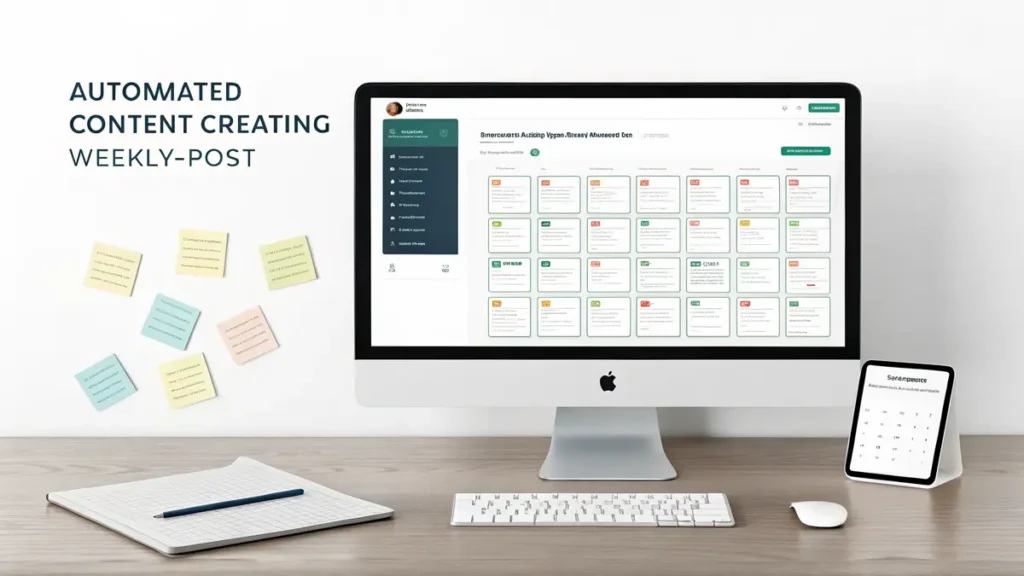
Third, social creates the content habit your business needs. Once you have a repeatable system for publishing short-form content, it becomes much easier to expand into other channels. If you want to understand what that workflow looks like in practice, you can review how the automation workflow works.
In other words, social automation is not always the highest-value channel forever. It is the best first operational fix for most businesses right now.
When Google Business Profile updates should come before blog content
If your business depends on local discovery, Google Business Profile updates should usually come before blog automation. That is especially true if customers find you through maps, branded searches, service-area searches, or “near me” intent.
Why? Because GBP updates support a direct visibility channel tied to buying intent. Someone searching for a local service often wants proof that your business is active, relevant, and current. Regular profile updates help reinforce that.
For example, if you run a local service business, clinic, salon, contractor business, or storefront, GBP activity can influence how credible and current your business appears. It is not a replacement for your website, but it can strengthen your local presence faster than a blog can.
That is why the usual comparison is not social versus GBP. It is GBP versus blog. If you only have room for one second-step automation layer after social, GBP often wins for local businesses because the path from visibility to inquiry is shorter. If local presence is a priority, explore a more focused approach to Google Business Profile automation.
Why blog content is powerful but rarely the best first step
Blog content matters. It builds search presence, supports authority, and gives your website more opportunities to rank. But it is usually not the best first thing to automate unless your business already has a functioning content strategy and the discipline to publish consistently.
Here is the main issue: blog automation is only valuable when it is connected to keyword targeting, internal linking, service relevance, and quality control. A blog is not just another place to post. It is a compounding asset, which means weak execution creates clutter instead of results.
That is why blog content often works better as the third layer. Once social automation is running and your GBP updates are active, you have enough content rhythm and operational clarity to support long-form publishing. At that point, blog automation becomes an expansion of a working system rather than an isolated tactic.
So yes, blogs can drive strong long-term gains. But if you automate blog content first while your social presence is silent and your local profile is stale, you are likely solving the wrong problem in the wrong order.
How to decide based on your current bottleneck
If you are still unsure, do not ask which channel is “best.” Ask which channel is currently blocking your visibility.
Choose social posts first if: you rarely post, your channels look inactive, or your team keeps falling behind on content.
Choose GBP updates earlier if: you serve a local market, map visibility matters, and your profile is underused or outdated.
Choose blog content earlier only if: your website already plays a central role in lead generation, you know what topics you need to rank for, and you can maintain quality over time.
This is the core principle behind good content automation for business: automate the channel that removes friction first. Do not start with the most impressive-looking system. Start with the one that fixes the most expensive inconsistency.
That also helps you avoid a common mistake: adding automation on top of unclear messaging. If your business cannot explain what it does, who it helps, and why someone should trust it, no channel will perform well. But once that foundation is clear, the right automation sequence can multiply your output without multiplying your workload.
The best rollout order for most small businesses
For most small businesses, the best rollout order is:
1. Social posts
Build consistency first. This creates visible activity across the platforms where people check whether your business is active.
2. Google Business Profile updates
Strengthen local search presence next, especially if your business depends on nearby buyers or service-area visibility.
3. Blog content
Add long-form search authority after the first two layers are stable and repeatable.
This sequence works because each step supports the next. Social gives you consistency. GBP gives you local search reinforcement. Blog content gives you long-term search depth. Together, they form a practical automation stack instead of three disconnected tasks.
If you want help building that in the right order, review the available automation packages or get started with a system that removes the manual marketing bottleneck without forcing you to manage every channel at once.
The key takeaway is simple: automate what breaks most often first. For most businesses, that is social posting. Then expand into GBP updates if local visibility matters. Then build blog automation once your publishing engine is mature enough to support it well.
TL;DR
If you are deciding what to automate first, social posts are usually the best starting point because they solve the biggest consistency problem fastest. Google Business Profile updates often come second, especially for local businesses that rely on search visibility. Blog content usually delivers strong long-term value, but it is rarely the first thing to automate unless your website already drives search traffic and you can support a consistent publishing plan.
- Start with social posts if your biggest issue is inconsistency and lack of regular visibility.
- Prioritize Google Business Profile updates early if local search and map visibility matter to your business.
- Automate blog content after you have a repeatable publishing workflow and clear topic strategy.
- The right first automation choice depends on your bottleneck, not on what sounds most advanced.
- For most small businesses, the best order is social posts first, GBP updates second, and blog content third.
Frequently Asked Questions
Should local businesses automate Google Business Profile updates before social media?
If local search is your main source of leads, GBP updates may deserve earlier priority. But for many businesses, social media automation still comes first because it is easier to sustain and creates a steady content rhythm.
Is automated content creation good for small businesses?
Yes, if it is structured well. Automated content creation helps you stay visible, reduce manual work, and maintain consistency across channels without needing to create every post from scratch.
Why not automate blog content first?
Blog content takes more planning, stronger topic targeting, and a longer time to show results. It is valuable, but it usually works best after you have already fixed your consistency problem with simpler channels.
What if I only have time to automate one channel?
Choose the channel that removes your biggest bottleneck. For most businesses, that is social posting. For some local businesses, it may be Google Business Profile updates.