Your business looks inactive online when your marketing only happens manually and inconsistently. Even if you are busy serving customers, outdated social media, no recent Google Business Profile updates, and long content gaps make people assume your business is less active, less trusted, or less established than it really is.
If your business is busy but your Instagram is quiet, your Google Business Profile has not been updated in weeks, and your last post on LinkedIn or Facebook is from last month, customers do not see momentum. They see silence. That is the core problem with digital visibility for small business: real activity does not automatically translate into visible activity.
This is why many owners feel frustrated by low engagement, weak lead flow, or the sense that social media is not working. The issue is often not that your business lacks value. It is that your online presence does not reflect the work you are already doing. When people search, compare, and check your business before buying, an inactive-looking presence creates doubt.
Why busy businesses still look inactive online
Small business owners usually assume that being booked, serving clients, shipping orders, or managing daily operations should count for something online. In reality, platforms and customers only respond to what is published, updated, and visible. If your last few posts are old, your profile looks abandoned, even if your calendar is full.
This disconnect happens because most businesses run on operational systems but not marketing systems. You have a way to deliver the service, fulfill the order, answer inquiries, and manage the day. But content is often handled manually, randomly, and only when there is extra time. That means your online presence is built on leftovers.
From a customer perspective, inactivity sends signals. It can suggest that your business is inconsistent, hard to reach, no longer focused on growth, or simply less credible than a competitor who shows up regularly. It does not matter that these assumptions are unfair. They still influence buying decisions.
Search engines and social platforms also reward recency and consistency. If your business profile, blog, and social channels are rarely updated, you lose more than attention. You lose discoverability. That is why visibility problems often show up as engagement problems, trust problems, and lead problems at the same time.
The real cost of low digital visibility for small business
When your business looks inactive online, the damage is usually subtle before it becomes obvious. People may still find you through referrals, repeat business, or local awareness. But the missed opportunities build quietly.
First, you lose trust at the comparison stage. A prospect hears about you, visits your profile, and sees no recent updates. Then they check another business with fresh posts, active reviews, and visible proof of work. Even if your service is better, the other business appears more established and easier to trust.
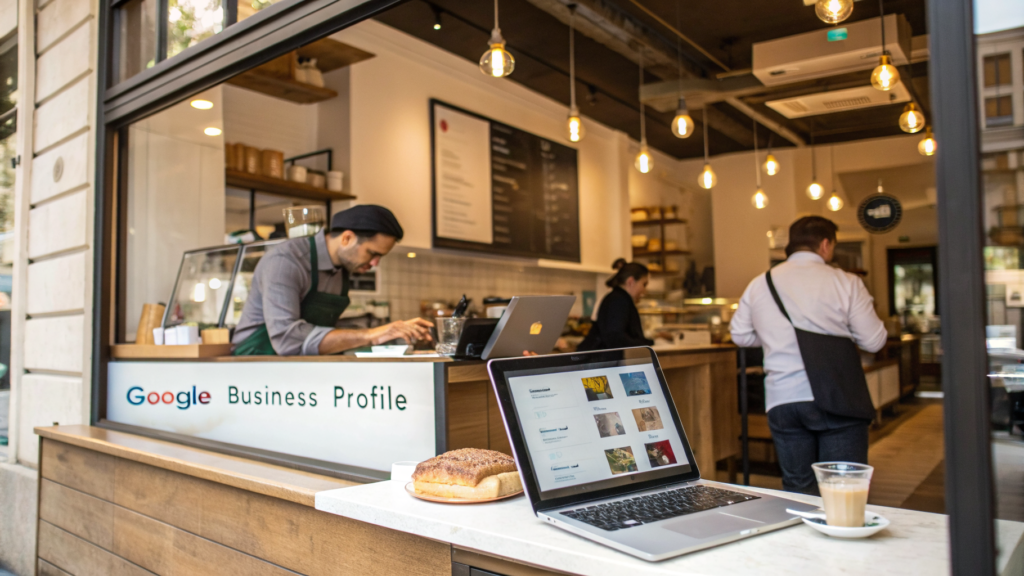
Second, you lose search visibility. Google Business Profile updates, blog content, and active digital signals help support relevance and authority over time. If those assets stay dormant, your business becomes easier to outrank. This is especially important for local service businesses, consultants, creatives, and product-based brands that depend on being discovered repeatedly.
Third, you lose momentum with warm audiences. Many people do not buy the first time they hear about you. They watch. They revisit. They check whether you are active and whether your business feels current. If there is nothing new to see, they stop paying attention.
Finally, you create internal marketing stress. Every quiet week makes the next post harder. The longer the gap, the heavier the restart feels. That is why inconsistency compounds. It is not just a content issue. It becomes a confidence issue.
If this sounds familiar, the fix is not simply posting more often for a week. It is building a structure that keeps your brand active even when your attention is elsewhere. That is the difference between random effort and a real system.
Why consistent social media posting breaks down for small business owners
The internet is full of advice about consistent social media posting, but most of it ignores how small businesses actually operate. Owners are not failing because they do not understand the importance of content. They are failing because the process is too manual.
Here is what usually happens. You get an idea while working, helping a client, packaging an order, or solving a problem. That idea could become a post, a story, a Google update, or even a blog topic. But there is no system to capture it quickly, adapt it for different platforms, and publish it consistently. So the idea disappears.
Then content becomes a separate project. You tell yourself you will sit down later to write captions, choose images, design graphics, and decide where to post. Later rarely comes. Or when it does, it comes in bursts. You post several times in one week, then disappear for three more.
This is the real reason many owners search for answers like why social media is not working for business, why my business gets no engagement, or how to stay consistent on social media. They do not have a motivation problem. They have a workflow problem.
Manual marketing breaks down because it depends on memory, energy, and spare time. Those are unstable resources. A business that wants stable visibility needs a stable publishing mechanism. Without one, every platform competes with revenue-generating work, and marketing loses almost every time.
That is also why content planning alone does not solve the issue. A calendar is helpful, but it is not infrastructure. You still need a way to turn real business activity into finished content without rebuilding the process from scratch every day.
What an effective small business marketing system actually needs
A real small business marketing system should do more than remind you to post. It should reduce friction between having something worth saying and getting that message published everywhere it matters.
At minimum, the system needs four parts.
1. A simple capture point. You need an easy way to submit one idea, update, product feature, customer win, seasonal offer, or insight without opening six different apps. If sharing content feels like a production task, consistency will fail.
2. Platform adaptation. One idea should not require six separate rewrites. A good system turns a single input into content that fits Instagram, LinkedIn, Facebook, X, Pinterest, and your Google Business Profile. Different platforms need different formatting, but the source idea should not need to be reinvented each time.
3. Ongoing distribution. Publishing has to happen even when you are busy. That means the system cannot rely on last-minute decisions. It needs a repeatable workflow that keeps your brand moving in the background.
4. Search-supporting assets. Social posting alone is not enough if you want stronger visibility. Blog content and Google Business Profile updates help extend your reach beyond followers and support long-term discoverability.
This is where many businesses start seeing the difference between occasional content help and actual marketing infrastructure. At SynqBrand, the focus is not just on posting. It is on removing the manual bottleneck. The system works by turning a simple content spark into cross-platform output, which is much more sustainable than trying to manually keep every channel active.
For businesses that need broader search presence, this matters even more. When social content, blog publishing, and business profile updates work together, your brand stops relying on one channel to carry all visibility. That layered presence is what makes a business look active, current, and credible across the buyer journey.
Social media agency vs freelancer vs automation system: which makes sense?
Many small business owners know they need help, but they are unsure what kind. Should you hire an agency, work with a freelancer, bring in a social media manager, or use automation?
The right answer depends on the real problem.
If you need full campaign strategy, branding support, paid ads management, creative direction, and hands-on consulting, an agency may be the right fit. But for many small businesses, the issue is not a lack of strategy. It is a lack of consistency. Paying agency pricing to solve a workflow problem can be more expensive than necessary.
A freelancer or social media manager can help if you want a human partner to create and schedule content. That can work well, but it still depends on communication cycles, availability, revisions, and ongoing coordination. For some owners, this creates another layer of management rather than removing the bottleneck.
An automation system makes the most sense when your business already has ideas, offers, products, updates, and expertise, but struggles to publish them consistently. In that case, the goal is not outsourcing your voice. It is creating a reliable engine that keeps your business visible.
This is especially useful for businesses that are active in real life but underrepresented online: local services, coaches, consultants, ecommerce brands, Etsy sellers, and founders wearing too many hats. Instead of asking whether hiring a marketing agency is worth it, a better question is this: do you need more strategy, or do you need a better system for execution?
If execution is the issue, an automated workflow often gives better long-term value. You can review different SynqBrand packages here to see how that kind of support can scale from simple publishing to a more complete visibility engine.
How to fix an inactive online presence without doing more manual marketing
The solution is not posting harder. It is reducing the number of steps between business activity and published visibility.
Start by identifying the content you are already creating indirectly. Customer questions, completed projects, product launches, before-and-after results, behind-the-scenes work, common mistakes, quick tips, testimonials, and seasonal updates are all content sources. Most businesses do not have a content shortage. They have a conversion shortage between daily work and public-facing content.
Next, stop treating each platform as a separate job. Your audience may interact with you on different channels, but your message can start from one source. A single insight should be able to become a short-form post, a business profile update, a carousel concept, and a blog topic. This is how you create consistency without multiplying effort.
Then make sure your Google presence is part of the plan. Many businesses focus only on social media while neglecting one of the highest-intent visibility channels they have. Regular updates to your profile help reinforce that your business is active and current. If that area has been neglected, SynqBrand also offers a dedicated business profile visibility solution designed to keep that presence from going stale.
Finally, choose a system you can maintain in busy seasons, not just slow ones. The best marketing workflow is not the one that looks impressive on paper. It is the one that still works when you are overloaded, understaffed, or focused on delivery. If your process only functions when you have extra time, it is not a real system.
That is why automation is becoming a practical answer for small business marketing. Not because owners want to sound robotic, but because they need a dependable way to stay visible while they run the business.
The best next step if you’re tired of looking inconsistent online
If your business looks quieter online than it really is, that gap will keep costing you attention and trust until you close it. You do not need to become a full-time content creator. You need a better operating model for visibility.
The strongest businesses are not always the ones doing the most marketing manually. They are often the ones with systems that keep them present everywhere their customers are looking. That includes social platforms, search results, and business profiles. When those channels stay active together, your brand appears more established, more reliable, and easier to choose.
SynqBrand is built around that exact problem. Whether you need a way to turn one idea into multi-platform content, an automated engine that keeps posting consistently, or a broader authority-building setup that includes blog and GBP updates, the goal is the same: eliminate the manual bottleneck so your business stops disappearing online. If you are ready to stop relying on inconsistent effort, you can start here or learn more at SynqBrand.
Because in most cases, the problem is not that your business is inactive. It is that your visibility system is.
TL;DR
Your business can be full of real work and still look inactive online if your marketing depends on manual posting. That gap hurts trust, search visibility, engagement, and lead flow. The fix is not more hustle. It is a small business marketing system that turns your ideas, offers, updates, and proof of work into consistent content across social platforms, your blog, and your Google Business Profile.
- Being busy offline does not automatically create digital visibility for small business.
- Long gaps in posting make customers assume your business is slow, outdated, or inconsistent.
- Consistent social media posting usually fails when it relies on memory, spare time, or last-minute effort.
- A strong small business marketing system should include capture, adaptation, distribution, and repetition.
- Many businesses do not need more ideas; they need infrastructure that removes the manual bottleneck.
- Automation can be more sustainable than hiring an agency or freelancer when consistency is the main problem.
Why does my business look inactive online even when I’m busy?
Because customers judge activity by what they can see online. If your social channels, blog, or Google Business Profile are outdated, they do not know you are serving clients behind the scenes.
Why is consistent social media posting so hard for small business owners?
Most owners treat content as an extra task instead of building it into a repeatable workflow. When posting depends on free time, it becomes inconsistent.
Can automation help without making content feel robotic?
Yes. Good automation uses your business information, offers, tone, and real updates to create platform-specific content. The goal is not generic posting. The goal is reliable visibility.
What is the best small business marketing system?
The best system is one you can actually maintain. It should make it easy to turn one idea, update, product, or proof point into content across multiple channels without requiring constant manual effort.
Should I hire a marketing agency or use an automation system?
If you need strategy, campaigns, and hands-on creative leadership, an agency may help. If your biggest issue is staying visible consistently, an automation system is often the more practical and cost-effective solution.