
Digital visibility for small business often breaks down when your company is active in real life but inconsistent online. If your posts, profile updates, and content go quiet, customers assume your business is less active, less reliable, or harder to trust. The fix is a small business marketing system that supports consistent social media posting and regular visibility across the platforms people check before they buy.
You can be fully booked, answering customers all day, shipping orders, managing staff, and still look inactive online. That disconnect is more common than most business owners realize. From a customer’s perspective, they do not see your workload. They see your last Instagram post from six weeks ago, a stale Facebook page, and a Google Business Profile with no recent updates.
That is why digital visibility for small business is not just about being good at what you do. It is about making your activity visible in the places people check before they contact you. If your online presence looks quiet, people often assume your business is slow, inconsistent, or no longer paying attention.
Why a busy business can still look inactive online
Your business runs on real work. Your online presence runs on visible signals. Those are not the same thing.
If you are serving clients, completing projects, restocking products, or handling operations, that effort only helps your online image when some part of it gets translated into public-facing content. Without that translation, your audience has no proof that your business is active right now.
This is the core problem behind many searches like “why social media not working for business” or “why my business gets no engagement.” Often, the issue is not that your business lacks value. It is that your activity is not being documented and distributed consistently enough to create momentum.
In other words, you are busy. But online, you look absent.
The signals people use to judge whether your business is active
Most people make quick decisions online. They are not conducting a deep audit of your business. They are scanning for signs that you are current, responsive, and established.
These are the signals they notice first:
- Recent social posts: If your latest content is old, people assume your business may be inactive.
- Google Business Profile updates: Fresh updates, photos, and engagement suggest you are operating consistently.
- Website freshness: A website that never changes can feel neglected, even if your services are excellent.
- Cross-platform consistency: If one profile is active and the rest are silent, your brand can look fragmented.
- Visible proof of work: New projects, offers, testimonials, behind-the-scenes updates, and product highlights all reinforce activity.
This is why digital visibility for small business is largely about perception management grounded in reality. You do not need to manufacture activity. You need to make your real activity easier to see.

Why consistent social media posting breaks down for small businesses
The biggest reason is simple: marketing is usually done after everything else.
You probably do not ignore content because you do not care. You ignore it because customer work, admin, sales, staffing, and fulfillment are more urgent. By the time you think about posting, you are already behind. Then content becomes a catch-up task instead of a built-in business process.
That creates a familiar cycle:
- You post when you have a burst of motivation.
- You disappear when work gets busy.
- Your profiles go quiet.
- Engagement drops because there is no consistency.
- You assume social media is not working.
This is the real inconsistent social media posting problem. It is not usually a creativity issue. It is a systems issue.
Consistent social media posting is hard when it depends on memory, spare time, and manual effort. If every post starts from a blank screen, consistency will always break under pressure.
That is also why many small businesses do not need more marketing ideas. They need a better way to turn normal business activity into repeatable content without adding another job to the owner’s plate.
What an inactive online presence costs you
When your business looks inactive online, the damage is usually subtle before it becomes obvious.
First, it weakens trust. A prospect may still like your service, but if your online presence looks neglected, they may hesitate. Silence can read as inconsistency.
Second, it lowers response momentum. People are more likely to engage with businesses that appear active, current, and present. Fresh content creates reassurance. Stale profiles create friction.
Third, it limits discoverability. Platforms reward activity. Search visibility, local relevance, and social reach all benefit when your business regularly publishes useful, current signals.
Finally, it makes your business look smaller than it is. You may be doing serious work behind the scenes, but if your online footprint does not reflect that, your authority stays hidden.
This is where many owners start looking for a better structure. If you want to understand how the system works when marketing is turned into a repeatable process, the key is removing the dependence on manual posting every time.
What actually fixes digital visibility for small business
The fix is not posting more randomly. The fix is building continuity.
Digital visibility for small business improves when your marketing can keep moving even while you are focused on operations. That usually requires three things:
- A capture point: a simple way to collect your ideas, updates, offers, wins, or business activity
- A conversion process: a way to turn one input into usable content for multiple platforms
- A publishing rhythm: a system that keeps content going out consistently enough to maintain visibility
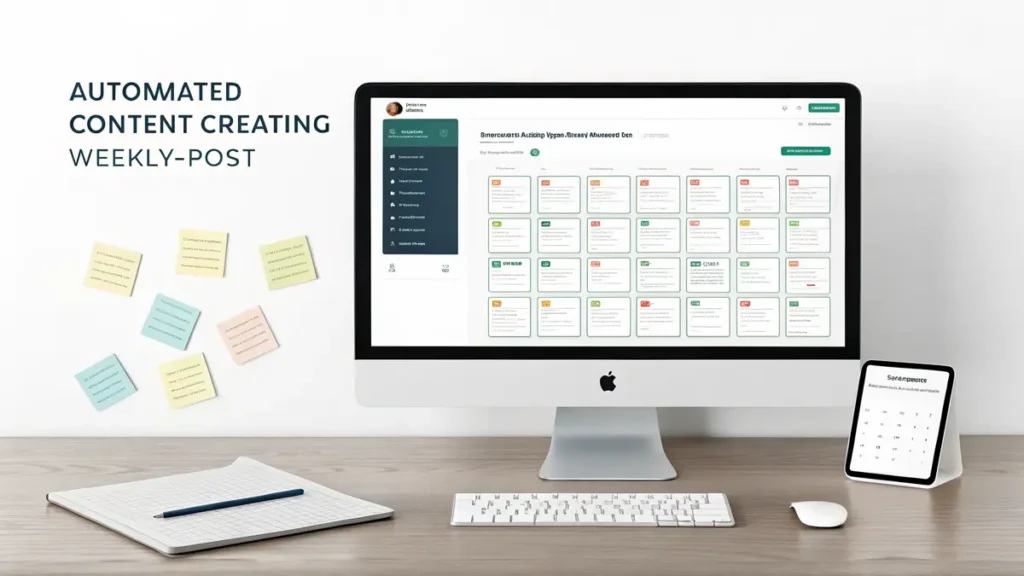
This is where a small business marketing system becomes more valuable than occasional effort. A system does not rely on ideal conditions. It works when you are busy, which is exactly when visibility tends to drop.
For example, one customer win, one product update, or one completed project can become multiple pieces of content across Instagram, LinkedIn, Facebook, X, Pinterest, your blog, or your business profile. The point is not to be everywhere for the sake of it. The point is to avoid disappearing.
That is also why content automation for business has become so useful. When done well, automation does not replace your voice. It supports your consistency.
How to build a small business marketing system that keeps you visible
If your current approach is manual and inconsistent, start by simplifying the workflow instead of trying to become more disciplined.
Here is a practical framework:
- List your repeatable content sources. These include customer questions, completed work, product updates, testimonials, team moments, promotions, and common insights.
- Create one input habit. Instead of trying to craft full posts every time, capture a quick idea or update in one place.
- Repurpose by platform. A single business update should not require starting over six times. Adapt it once, then distribute it where your audience already checks.
- Keep a baseline schedule. A simple, steady rhythm beats random bursts of activity.
- Include search-facing channels. Social matters, but so do blog posts and profile updates that support long-term visibility.
If you are comparing options, this is often the difference between hiring for constant manual execution and using a structure that keeps content moving with less friction. For businesses that need a practical next step, reviewing available marketing packages can help clarify what level of support matches your current growth stage.
SynqBrand is one example of this system-based approach. Instead of treating marketing like a series of isolated posts, it helps businesses stay visible by turning one idea into cross-platform content, supporting consistent publishing, and extending that visibility into blog and Google Business Profile updates. If your business is active but not appearing active, that kind of infrastructure solves the actual bottleneck.
The important point is bigger than any one tool or provider: visibility improves when marketing becomes a system, not a side task.
If your business looks quieter online than it really is, the answer is not to work harder at posting whenever you remember. The answer is to make visibility part of your operating system. Once that happens, your online presence starts reflecting the business you are already building every day.
If you want a next step, you can explore Google Business Profile support or get started with a system designed to keep your business visible without adding more manual marketing to your week.
TL;DR
Your business can be busy in real life and still look inactive online if your content, profile updates, and platform activity are inconsistent. Customers judge whether you are active based on recent posts, Google Business Profile updates, visible engagement, and signs of current activity. The fix is not posting harder when you remember. It is building a repeatable small business marketing system that turns your real work into steady online visibility.
- Being busy is not the same as being visible online.
- Customers use recent content and profile activity to decide whether your business is active and trustworthy.
- Inconsistent social media posting creates the appearance that nothing is happening.
- The cost of low visibility includes lost trust, fewer inquiries, and weaker local search presence.
- The most reliable fix is a small business marketing system, not occasional bursts of effort.
- Simple automation can turn one business update into consistent multi-platform visibility.
Why does my business look inactive online if I am working every day?
Because customers cannot see your workload. They judge activity by what is publicly visible: recent posts, updated profiles, current photos, reviews, and Google Business Profile activity.
How often should a small business post to avoid looking inactive?
The exact frequency depends on your business, but consistency matters more than volume. A steady posting rhythm is better than posting heavily for one week and disappearing for a month.
Is social media the only factor in digital visibility for small business?
No. Your website, Google Business Profile, reviews, blog content, and cross-platform consistency all contribute to how active and trustworthy your business appears.
Why is consistent social media posting so hard for business owners?
Because marketing usually gets pushed behind operations, sales, service, and admin work. Without a system, posting depends on spare time and memory, which makes it inconsistent.
What is a small business marketing system?
It is a repeatable process that captures business updates, turns them into content, and distributes them consistently across the platforms your audience checks.
Can automation help without making content feel generic?
Yes. Good automation uses your real offers, updates, and business context to maintain visibility. It should reduce manual bottlenecks, not replace your business voice.